
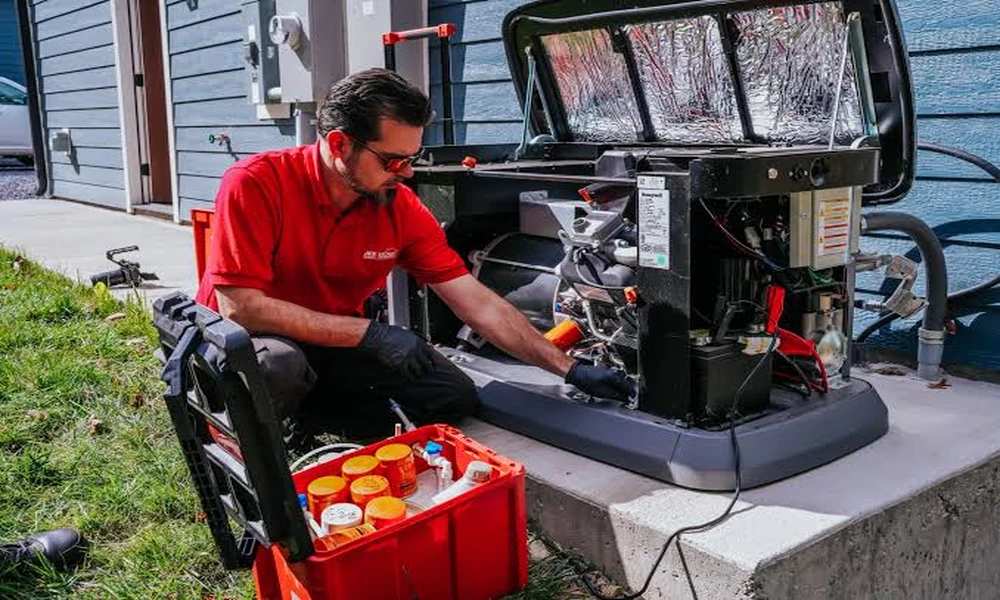
Fifty hours. That’s the gap most Central Virginia homeowners discover the hard way, because it’s roughly how long a stocked fridge holds a safe temperature once the power dies for good in July heat. So when my neighbor Ray rattled off the three generator quotes sitting in his truck, I told him to slow down. He had already missed the question every quote was quietly dodging: how much of the house he actually wanted to keep running.
That order of operations is backward for most people. They shop brands, collect prices, and argue about wattage before they’ve decided whether the goal is a fridge and a few lamps or a house that feels normal from the moment the grid drops until the moment it comes back. The second version costs meaningfully more, needs a permanent fuel source, and turns the project into a remodel you’ll live with for decades. Worth knowing before anyone waves a brochure.
Lynchburg sits squarely in a storm corridor. High wind, snow, and summer thunderstorm clusters take the grid down with steady regularity, and older housing stock scattered across the region turns every outage into a small gamble. If you’re already researching Electrical contractors in Lynchburg, VA, the decision checklist below will save you from buying the wrong machine the first time.
Start with what must stay on, not with wattage
Strip your house down to essentials on paper first. My rule: anything you’d panic about losing for twenty four hours belongs on the list. Furnace blower in winter, refrigerator and a couple of freezers, well pump if you’re on one, wifi and a phone charger, a few lights. Add central air only if someone in the house genuinely cannot tolerate heat, and understand that an air conditioner’s startup draw can shove your sizing up a whole tier on its own.
Two hard starting appliances, like a well pump and a furnace, will often need more buffer than their running wattage suggests. This is exactly the point where a clipboard beats a contractor’s best guess. Your numbers decide the system, not the other way around.
- Essential circuit list: what runs daily, and what you refuse to lose overnight
- Two fuel rough-ins: one source you can live with, one backup plan if it’s unavailable
- A practice window: the season you’d realistically want the unit running by
Whole house or essentials-only? Pick honestly
For most homes in this region, I’d choose the essentials path and spend the savings on a bigger propane tank or better surge protection. A properly wired essentials setup keeps the food cold, the pipes thawed, and the lights on, and it sidesteps the service upgrade that whole-house sizing frequently requires.
The whole-house crowd isn’t wrong, just richer. If you work from home with a rack of equipment, or you’ve got a medical reason that makes heat and AC non-negotiable, then a full transfer is the honest answer. Anything in between is where a licensed electrician earns their fee sizing the load properly rather than matching a nameplate to a sales pitch.
A sizing scenario worth borrowing
Picture a ranch outside town on a well, propane heat, two adults. The essentials list is lights, fridge, freezer, well pump, furnace blower, and a router. It’s not dramatic, and it isn’t glamorous. It’s also the setup that carries the house through a multi-day outage with a tank that was already in the yard. Reaching for a bigger machine to add central AC would have doubled the unit cost and triggered a service upgrade, so they skipped it.
Fuel: propane, natural gas, and the boring details that bite
Natural gas is the easiest answer if the line reaches your lot. Propane is the answer almost everywhere else, and it means tank planning up front, because a generator running for days drinks fuel faster than a grill ever will. A large buried tank refilled on schedule beats a small one you have to remember in a storm.
Fuel storage and safety questions are worth routing to the official sources rather than a forum thread. The Department of Energy publishes plain-language guidance on home backup power options that’s a useful gut check. Read it before a salesperson does the reading for you.
The permitting and installation path, step by step
Where the unit sits matters as much as what it is. Setback from property lines, clearance from windows and doors, exhaust direction, and noise near a neighbor’s bedroom all get reviewed. Your checklist, in order:
- Pull the essential circuit list and give it to the electrician you hire
- Agree on whole house or essentials-only, in writing
- Confirm fuel source and tank capacity with the fuel supplier
- Get the service panel assessed, including whether a transfer switch fits the available space
- Confirm local permitting and the inspection window before anyone digs
- Schedule the electrical and fuel rough-ins so neither crew waits on the other
- Book the first maintenance visit before the installation is even finished
Step four is where plenty of projects stall for a month. A panel that’s already full needs replacing, and the machine can’t land until the new panel passes inspection. Get that finding early, not the week the unit arrives on a pallet.
Older homes need an honest look first
A surprising share of the housing around here predates modern wiring standards. Fuse boxes that were undersized when they were installed are now doing double duty, and grounding that was acceptable decades ago may not satisfy current code. A generator wired into a weak panel is a problem with a nice cover on it.
The path forward is a panel assessment before a generator commitment. It’s the same logic behind product safety certification: the standards organization UL certifies listed equipment such as standby generators, and that listing only means something on a system that can support it. Buy the good machine. Fix the panel first.
Maintenance is the part that protects your money
Standby generators sit idle for months and then have to work perfectly. Oil, filters, battery condition, and a short exercise cycle under load keep them honest. Skipping the yearly service is the fastest way to void a warranty, and it’s the reason I’d tell any homeowner to schedule the first visit during installation, not afterward. Nobody remembers in November.
Set a calendar reminder for early fall. That’s when the unit faces its first real test, and that’s when every generator tech in Central Virginia is booked solid. If you want someone to blame when the lights stay on, blame the calendar.
Where to put your money, in one order
If I had a single column for a Central Virginia household, it would read: panel first, transfer switch second, essentials sizing third, fuel tank fourth, and the biggest unit last. This is the kind of field-tested judgment you don’t get from a spec sheet, and it’s what separates a quote that ages well from one that causes a second project two winters later.
Trade labor and demand both run steady year round in this part of the state. The Bureau of Labor Statistics tracks electrician employment trends, and the field stays busy, so a licensed crew with real experience on older regional housing is worth waiting for. Get two quotes, not one, and ask each contractor to walk your panel with you in person.
Your homework: write the essentials list tonight, photograph the panel with the cover off, and call for an assessment before storm season fills the schedule. Do that, and the next outage becomes an inconvenience instead of a week-long scramble. What’s actually on your list?