
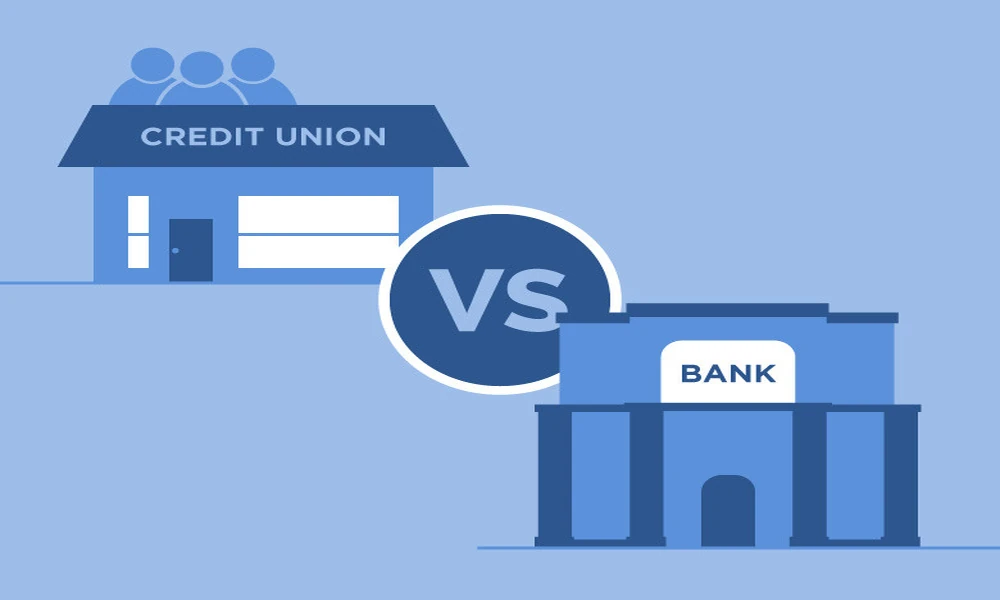
Most people pick a bank the way they pick a gas station. It is close, the sign is familiar, and they never think about it again. That default setting costs the average household real money every single year, because the gap between a big bank and a member-owned institution shows up in fees, loan rates, and how quickly anyone answers the phone when something goes wrong.
So here is the short answer up front. Banks are owned by shareholders. Credit unions are owned by the people who keep money there. That single structural difference drives almost everything else you will notice as a customer, from who gets the profits to how a loan officer treats you on a Tuesday afternoon. If you live in southwest Ohio, a Dayton Area Credit Union like River Valley tends to compete hardest on exactly those points, and that matters more than any marketing slogan.
Below, you will see how the two models actually work, what each one is genuinely better at, and a simple way to decide which one deserves your paycheck.
Who Actually Owns the Place Holding Your Money
When you open an account at a bank, you are a customer. When you open one at a credit union, you are a member and technically a part owner. You get one vote regardless of how much you deposit, which sounds like a trivia fact until you realize it changes the incentive structure entirely.
A bank answers to shareholders who want a rising stock price. A credit union answers to members who want lower fees and better rates. Nobody at a credit union is under pressure to squeeze an extra dollar out of your overdraft to impress Wall Street. That is the whole reason the model exists.
Credit unions do have membership requirements, usually based on where you live, work, or worship. Living in the Dayton metro area is generally enough to qualify for one of the local options. That geographic tie is a feature, not a bug. The board members live in your zip code, and decisions get made by people who also sit in traffic on I-75.
Where Credit Unions Usually Beat Banks
I have watched friends pay $35 in overdraft charges three times in one month and then act surprised. Meanwhile, the savings account paying 0.01% sat there quietly draining value.
Credit unions tend to win on three fronts, and they win by a wide margin.
- Loan rates. Auto loans, personal loans, and home loans usually come in lower because there is no shareholder dividend to fund. On a $25,000 car loan, even a small rate difference adds up to hundreds over the life of the loan.
- Fees. Lower monthly maintenance charges, fewer surprise charges, and more forgiving overdraft policies are common. Some credit unions offer free checking with no minimum balance.
- Savings yields. Because they are nonprofits, credit unions often pass more of the interest back to members. Certificates of deposit and money market accounts frequently outperform what a big national bank offers.
There is also the customer service angle, which is harder to put a number on. A member-owned institution has no reason to route you through six phone menus. People notice this, and it is usually the thing they mention first when you ask why they switched.
The Question Every Saver Asks: Is My Money Safe?
This is where people get nervous, and honestly, the fear is based on a misunderstanding of how deposit insurance works.
Banks carry FDIC insurance. Credit unions carry coverage through the National Credit Union Share Insurance Fund, which is administered by the National Credit Union Administration. Both programs insure deposits up to the same standard limit per depositor, per institution. Your money is protected the same way whether you walk into a bank branch or a credit union lobby.
The NCUA is an independent federal agency, and it backs credit union deposits with the full faith and credit of the United States government. There is no weaker tier of protection hiding in the fine print. If a credit union fails, the insurance fund steps in exactly like the FDIC does for banks.
So if safety is the reason you have been staying at a big bank, that reason does not hold up. Your deposits are covered either way.
What Big Banks Still Do Well
I am not going to pretend credit unions win everything. They do not, and acting like they do is how you end up disappointed.
National banks dominate in three areas that genuinely matter for some people. Branch and ATM networks stretch across the country, which helps if you travel constantly. Their mobile apps and online banking tools have had more money poured into them, so they often feel smoother. And larger institutions can underwrite bigger, more complex business loans or mortgages that a smaller credit union might not have the balance sheet to handle.
If you run a company that needs a line of credit above a certain size, or you are on a plane twice a month, a national bank might genuinely serve you better. That is a real trade-off, and it deserves an honest answer rather than loyalty to a slogan.
A Simple Way to Decide
Here is the framework I would use, and it takes about fifteen minutes.
- List what you actually do with money. Direct deposit, a car payment, occasional cash withdrawals, and a savings cushion. That is most people. If your list looks like that, a credit union covers it.
- Check the fee schedule. Every institution publishes one. Look for monthly maintenance fees, overdraft charges, and out-of-network ATM costs. This is the fastest way to compare two places side by side.
- Compare rates on the products you hold. If you have $5,000 sitting in savings, the yield difference between a credit union and a big bank is real money each year. Do the math on your actual balance.
- Ask about membership eligibility. Most credit unions have an easy path in through your employer, your address, or a family member who is already a member.
- Test the service before you commit. Call with a question. Send a message through the app. You will learn more in ten minutes than from any review.
One practical tip that saves people real headaches: keep accounts at both. Use a credit union for savings, loans, and everyday checking, and keep a small account at a national bank for travel and ATM access. There is no rule that says you have to pick a side, and plenty of people run this exact setup without any trouble.
Before you open anything, pull your credit report. The Federal Trade Commission explains that you can request free reports from the official source, and checking yours first prevents surprises when a lender pulls it later. Getting your financial house in order starts with knowing what is already in it.
Why This Choice Compounds Over Time
Every dollar you save in fees or earn in higher interest is a dollar that stays in your pocket, and those dollars stack up faster than most people expect. Swap a $12 monthly maintenance fee and a weak savings rate for a free checking account and a competitive yield, and you are looking at real money over a decade.
Membership also tends to mean something. A cooperative that exists to serve its members, regulated at the federal level and covered by deposit insurance, is a genuinely different kind of institution than a company optimizing for quarterly earnings. That ethos shows up in small ways, from how quickly a loan decision gets made to whether anyone remembers your name when you walk in.
The MyCreditUnion.gov resource from the NCUA walks through the cooperative model in plain language if you want to dig deeper before making a decision.
You do not need to overhaul your whole financial life this week. Start by comparing one thing: the rate on your savings account versus what a local credit union offers. If the gap is bigger than you expected, that tells you everything you need to know.
So which is it for you, the familiar name on the corner, or the institution that hands the profits back to the people who walked in the door?