


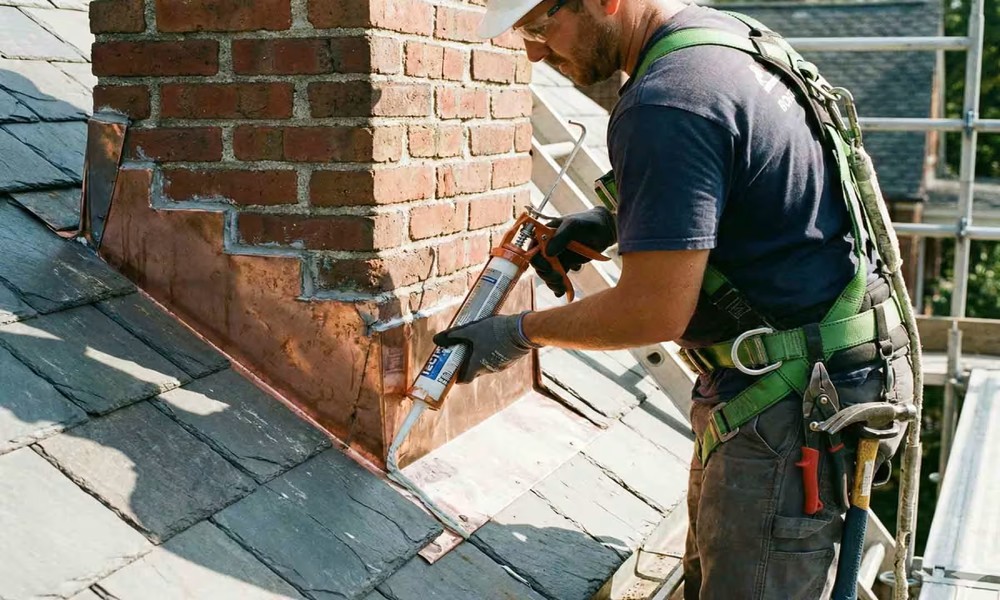
Moisture problems rarely start with dramatic leaks; they often begin with a thin opening around the chimney that goes unnoticed until damage spreads. This is why people searching for roof repair near me often learn that flashing separation is one of the quickest ways for water to enter a home. Small shifts around chimney seams create far-reaching issues that affect comfort, structure, and energy efficiency in ways many do not expect.
Why Small Gaps Quickly Lead to Interior Moisture Damage
Tiny openings around the chimney may not look threatening, but they allow rainwater to slip beneath shingles and settle into the roof structure. Even a narrow gap can introduce steady moisture that slowly saturates the underlayment, drywall, and framing. Over time, stains, bubbling paint, and warped surfaces appear inside the home as the water continues to spread. Progressive moisture also creates ideal conditions for mold. While many think leaks appear instantly, the truth is water often travels far from the chimney before showing a visible mark. People contacting a roof repair company usually find that the initial gap near the chimney was much smaller than the damage it caused inside.
The Structural Risks That Grow Around Exposed Chimney Joints
Chimney joints rely on flashing to create a firm, sealed transition between the masonry and the roofing surface. Once that protection weakens, the surrounding structure begins absorbing moisture it was never designed to hold. Waterlogged areas can weaken nails, rot decking, and soften rafters over time. These structural changes affect stability. An untreated opening can lead to sagging sections or shifting around the chimney base. Madison roof repair teams often point out that structural failure frequently begins with minor flashing separation long before larger problems appear.
How Displaced Flashing Accelerates Roof Deck Deterioration
Flashing displacement exposes roof decking to constant wetting and drying cycles. These cycles weaken the wood, break down fibers, and cause soft spots to develop. Decking that stays damp loses strength quickly, making it harder for shingles to stay attached. The deterioration spreads because moisture rarely stays contained in one place. Over time, the wood beneath the shingles becomes unstable, causing dips and uneven surfaces. Roofing near me inspectors frequently see this pattern during assessments for full roof replacement.
Water Pathways Created When Flashing Pulls Away
Once flashing pulls away, pathways form that guide water under the surface instead of allowing it to roll off as intended. Gravity pulls water downward, but structural angles can also direct it sideways, causing leaks to appear far from the actual source. This makes diagnosing the issue difficult without trained help. The biggest concern is how quickly these pathways widen. As water moves under the shingles, they loosen, curl, or lift, allowing even more water underneath. Roof repair specialists often find that the leak spreading across a ceiling began with only a small flashing shift near the chimney.
Why Weakened Seal Lines Fail During Heavy Storms
Seal lines around flashing must withstand wind, pressure, and pounding rain. Once the bonds weaken, storms take advantage of every gap. High winds lift unsealed edges, while driving rain forces water deep into the roof system. Stormy conditions escalate the problem far faster than normal rainfall. Gutters that overflow or backflow during severe weather also increase water exposure around the chimney area. People searching for roof repair near me after storms frequently learn that flashing separation was the starting point for the damage.
The Insulation Damage Caused by Hidden Water Intrusion
Insulation beneath a roof loses effectiveness the moment moisture enters. Flashing separation allows hidden water infiltration that dampens insulation, causing it to compress and lose its ability to trap air. The result is uneven temperatures and higher energy bills. Wet insulation also becomes a breeding area for mold. Long-term exposure spreads that moisture into adjacent walls and ceilings, increasing the scope of the damage. Roof repair teams often discover that insulation damage is more severe than the homeowner realized because the water traveled quietly for weeks or months.
How Open Seams Allow Rapid Heat Loss and Energy Waste
Gaps around chimney flashing give more than water a place to enter-they create ventilation points that let heat escape. Warm air leaking through those seams forces the heating system to work harder, raising energy costs throughout colder months. These losses are subtle but add up quickly.
Airflow issues also affect comfort. Rooms beneath the damaged area often feel drafty or inconsistent in temperature. People calling for Madison roof repair are frequently surprised that flashing, not insulation alone, caused their heating concerns.
The Long-term Roof Failures Linked to Untreated Flashing Gaps
Untreated flashing gaps start a chain reaction. Moisture weakens decking, rusts nails, lifts shingles, and compromises underlayment. Over years, these problems combine until the roofing system can no longer protect the home effectively. What began as a simple repair now turns into a full roof replacement.
Such failures rarely stay isolated to one area. Water travels down valleys, over rafters, and across attic spaces, damaging multiple sections before the issue becomes noticeable. Roofing near me contractors often stress that catching flashing separation early prevents these costly long-term failures.
Trained professionals can identify these issues before they ripple into larger problems, restoring the system’s protection and preventing ongoing deterioration. Fleming Roofing provides the expertise needed to repair chimney flashing correctly and safeguard the home from further damage.