
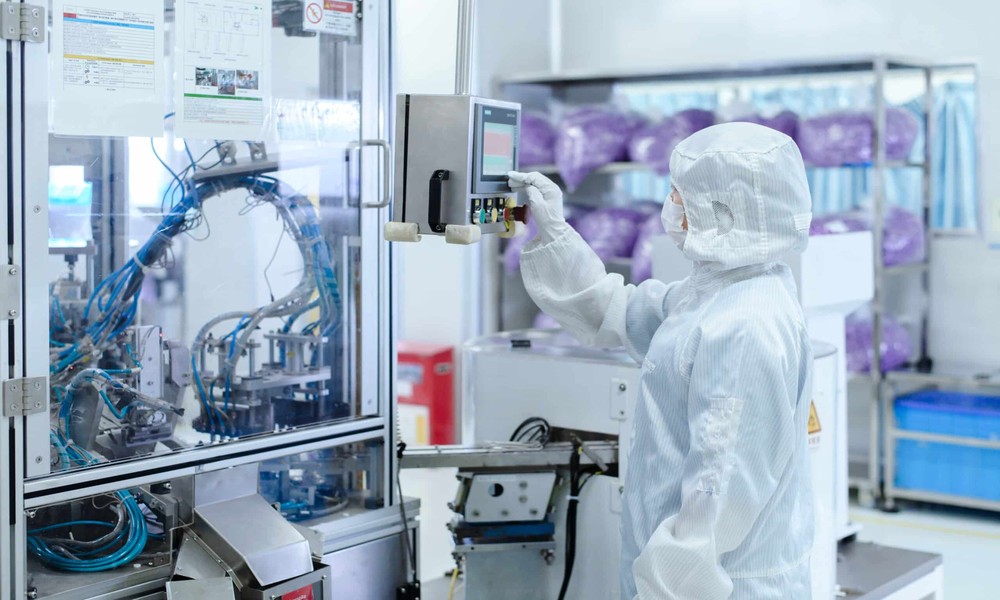
The decision to engage a partner in OEM contract manufacturing for medical devices is not made lightly, and it should not be. Unlike most industrial procurement decisions, this one carries consequences that extend well beyond delivery schedules and unit economics. The component coming off the production line may one day be inserted into a patient, implanted against tissue, or relied upon to deliver a precise therapeutic dose. That reality changes the nature of the evaluation entirely. It demands a level of scrutiny that most other manufacturing relationships do not require, and a degree of trust that must be earned rather than assumed.
Defining What OEM Contract Manufacturing Actually Involves
In the medical sector, OEM contract manufacturing refers to the arrangement by which an original equipment manufacturer engages an external partner to produce devices or components to the OEM’s design and specification. The contracting party retains ownership of the intellectual property, the regulatory submissions, and typically the commercial relationship with the end customer. The manufacturer provides the production capability, the process expertise, and the quality systems necessary to produce to specification consistently.
This arrangement has become increasingly common. The capital investment required to build and maintain a compliant medical manufacturing facility is substantial. The regulatory knowledge required to operate one is substantial. Many device companies, particularly those in earlier stages of growth, find it more practical to access those capabilities through partnership than to build them independently.
The Regulatory Foundation
Any serious medical device contract manufacturer operates within a quality management system certified to ISO 13485, the international standard governing quality management in medical device production. This standard is more demanding than its general manufacturing equivalent, reflecting the unique requirements of a sector where process failures can carry direct patient safety consequences.
Certification to ISO 13485 establishes the structural conditions for compliant production. It does not, by itself, guarantee quality. The questions worth asking go beyond the certificate:
- What is the manufacturer’s history with regulatory inspections, and how have findings been addressed?
- How are design changes managed, and what is the process for communicating specification updates?
- What traceability systems are in place, and to what level of granularity are production records maintained?
- How does the manufacturer handle deviations and non-conformances, and what is the average time to corrective action?
These questions reveal whether the quality system is a working infrastructure or a compliance exercise. In OEM medical device manufacturing, the distinction matters greatly.
Clean Room and Process Capability
The physical environment in which medical devices are manufactured is itself a quality variable. Many device categories require production in controlled environments, where particulate levels, temperature, humidity, and microbial contamination are actively managed and monitored. The classification of the clean room, whether ISO Class 7, Class 8, or otherwise, should correspond to the requirements of the specific device and its intended application.
Beyond the environment, process capability across relevant manufacturing methods is worth examining carefully. A capable contract manufacturer for medical devices will typically offer a combination of:
- Precision CNC machining for surgical instruments, implantable components, and diagnostic housings
- Plastic injection moulding for single-use devices, fluid management components, and enclosures
- Metal injection moulding for small, geometrically complex components requiring high strength
- Assembly under controlled conditions, with documented procedures and inspection at each stage
- Sterilisation compatibility assessment, ensuring that materials and finishes survive the relevant sterilisation method
Each of these capabilities carries its own validation requirements. The manufacturer should be able to demonstrate, through process validation documentation, that production outputs are consistently within specification under normal operating conditions.
Singapore’s Role in Medical Device Contract Manufacturing
Singapore has developed a well-regarded position within the global OEM contract manufacturing for medical devices landscape. The country’s regulatory agency maintains a rigorous framework for medical device registration and manufacturing oversight, which has helped establish Singapore-based manufacturers as credible partners for international OEM clients seeking production in the Asia-Pacific region.
The concentration of engineering talent, the quality of physical infrastructure, and the country’s long-standing commitment to precision manufacturing have collectively made Singapore a practical hub for technically complex medical production. Manufacturers operating within this environment have built experience across implantable components, diagnostic equipment, surgical tools, and single-use devices, often serving OEM clients in North America, Europe, and Japan simultaneously.
Intellectual Property and Confidentiality
The OEM contract manufacturing relationship necessarily involves sharing design files, material specifications, and manufacturing know-how with an external party. This creates intellectual property exposure that must be actively managed. Confidentiality agreements should be reviewed carefully and should address not only the designs themselves but also manufacturing processes developed during the partnership, tooling ownership, and the handling of technical information if the relationship ends.
Jurisdiction matters here. A contract governed by the law of a country with robust IP enforcement provides stronger practical protection than one governed by a jurisdiction where enforcement is uncertain. This is one area where Singapore’s legal environment, which is well developed and internationally respected, provides a meaningful practical advantage for OEM clients selecting partners in the region.
Volume, Scalability, and the Long View
Medical device programmes rarely stay static. A product that launches at modest volume may scale significantly following clinical adoption or regulatory clearance in additional markets. The contract manufacturer selected for the initial programme should have the capacity, or a credible plan to develop the capacity, to grow alongside the product.
Equally important is the manufacturer’s stability as a business. A partner that lacks financial resilience or that depends on a very narrow customer base introduces supply chain risk that can prove very difficult to manage if the relationship becomes disrupted.
The evaluation of a partner for oem contract manufacturing medical devices is, ultimately, an evaluation of whether that organisation can be relied upon to perform consistently over the full lifetime of the product.